Welcome to Cherokee County Georgia
When Cherokee County was the worlds largest broiler county
Remembering the massive sign that welcomed travelers to Cherokee County
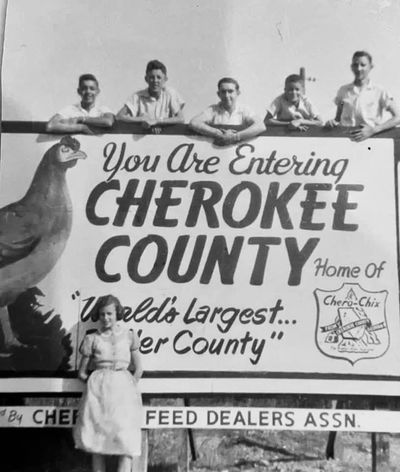
There was a time when you could enter Cherokee County and be greeted by a sign that proudly made a remarkable claim:
WELCOME TO CHEROKEE COUNTY
WORLD’S LARGEST BROILER PRODUCING COUNTY
It was a massive roadside landmark, tied to the county’s poultry and feed industry and a reminder of an era when chickens were every bit as important to Cherokee County’s identity as cotton, mills and farming had been before them.
Today, many people driving through Cherokee County would have a hard time imagining just how important poultry once was to the local economy.
But in the years following World War II, Cherokee County was becoming a poultry powerhouse.
CHICKENS CHANGED CHEROKEE COUNTY
According to historical agricultural records published by the Georgia Department of Agriculture in 1954, the commercial broiler industry had already transformed farming in Cherokee County.
The state reported that broiler production had replaced cotton as the main source of farm cash income in the county.
Even more remarkable, the report stated that 92 percent of Cherokee County’s farm cash income came from poultry.
The county was producing more broilers than any other county in Georgia at the time.
That wasn’t simply a slogan painted on a giant sign.
It was the economic reality of Cherokee County during the poultry boom.
THE FEED DEALERS WERE PART OF THE STORY
The massive welcome sign was associated with the Cherokee Feed Dealers Association, representing the businesses that supplied the feed that kept this rapidly growing industry alive.
Feed dealers played an important role in the development of the local broiler business.
Farmers needed chicks.
They needed specialized feed.
They needed equipment, veterinary services and other supplies.
And as the number of chickens grew, an entire network of businesses grew alongside them.
Historical records identify early Cherokee poultry pioneers including R.O. Cotton and members of the Lawson family. One Lawson operation went from selling enough feed for about 10,000 baby chicks in its first year to supplying feed for more than 2 million baby chicks by 1950.
That’s how quickly the industry exploded.
THE NUMBERS WERE HUGE
Georgia was becoming the nation’s poultry leader during this same period.
By 1957, Georgia produced approximately 261 million commercial broilers, and the state had led the nation in broiler production for seven consecutive years.
Cherokee was right in the middle of that explosion.
The 1954 agricultural data recorded more than 12.7 million broilers sold from Cherokee County farms.
The county had hundreds of farms participating in the poultry economy, with hatcheries, feed businesses, egg operations, processing and other industries developing around them.
The poultry business wasn’t just about farmers raising chickens.
It had become an entire economic system.
A NEW KIND OF FARMING
The rise of broiler production changed what a Cherokee County farm could look like.
Instead of relying primarily on traditional crops, farmers could raise thousands of chickens in specialized houses and sell them into a rapidly expanding commercial market.
The state’s historical agricultural report described the poultry industry as bringing prosperity to Cherokee farmers while also contributing to improved pastures, livestock and a more balanced farm economy.
And Cherokee County’s poultry connection went beyond farms.
In 1953, veterinarian Dr. Thomas “Jack” Douglas came to Canton and opened the first poultry laboratory in Cherokee County. The laboratory helped identify poultry diseases before chickens were shipped for consumption.
That tells you just how sophisticated the local poultry industry had become.
THE SIGN TOLD THE STORY
That enormous welcome sign became a symbol of the era.
For someone traveling into Cherokee County in those days, the message was impossible to miss.
This was poultry country.
This was broiler country.
And Cherokee County wasn’t shy about telling the world.
The sign represented an agricultural community proud of something that had brought jobs, investment and prosperity to local families.
Today, the landscape looks dramatically different.
Fields and chicken farms have been replaced in many places by neighborhoods, shopping centers, highways and subdivisions.
But the poultry connection never completely disappeared.
THE INDUSTRY DIDN’T DISAPPEAR
Cherokee County is no longer the small rural farming community that proudly advertised itself as the world’s largest broiler-producing county.
But poultry remains an important part of Georgia’s agricultural economy, and Cherokee’s historic connection to the industry remains part of the county’s story.
The rise of the poultry industry helped connect Cherokee County to the larger North Georgia poultry corridor centered around Gainesville and surrounding counties. By the late 1950s, Cherokee was still among the nation’s significant broiler-producing counties.
So that giant sign represented more than chickens.
It represented a turning point.
It was a declaration that Cherokee County had entered a new agricultural age.
Long before the explosive suburban growth we know today, millions of chickens helped put Cherokee County on the map.
And if you ever wonder why an old photograph shows a giant sign proudly proclaiming Cherokee County as the “World’s Largest Broiler Producing County,” remember this:
For a remarkable period in Cherokee County history, that wasn’t just advertising.
It was something the county had earned.
EYE ON CHEROKEE
Cherokee County has changed dramatically over the decades, but its history is still sitting in old photographs, roadside signs, farmhouses, feed stores and forgotten pieces of the landscape.
This is the Cherokee County many people remember, and the history we don’t want forgotten.
Canton Georgia July 4th 1960
CANTON, GEORGIA IN 1960, WHEN THE WHOLE TOWN CAME TOGETHER!
🇺🇸 The year was 1960, and life in Cherokee County was a whole different world. Downtown Canton was the heart of the community, and when a holiday rolled around, folks didn’t need Facebook, text messages or fancy invitations to get together. They simply headed into town because that was where everybody would be!
This wonderful photograph takes us back to July 4, 1960, when Independence Day was about much more than fireworks. It was a chance to see old friends, visit with neighbors, show off the children and celebrate being part of a close community.
Back then, downtown Canton was a place where people knew each other by name. Families came from surrounding communities, shopkeepers greeted familiar customers, and conversations could last longer than the shopping itself. Holidays brought an extra sense of excitement as generations gathered to enjoy the occasion.
🇺🇸 WHAT WAS LIFE LIKE IN 1960?
Dwight D. Eisenhower was President of the United States, and a young senator named John F. Kennedy was preparing for a historic presidential election against Vice President Richard Nixon. America was entering a decade of enormous change, although few people could have imagined just how much the country would transform.
In Cherokee County, the cotton mills remained an important part of Canton’s identity. Many families depended on manufacturing, farming, small businesses and local trades to make their living.
The national median family income was approximately $5,600 a year, or about $108 a week. Manufacturing workers nationally earned an average of roughly $2.37 an hour. Money was tight for many families, but a dollar certainly went further at the grocery store than it does today.
🎶 THE MUSIC EVERYBODY WAS LISTENING TO
Elvis Presley was still the King of Rock and Roll, Brenda Lee was singing “I’m Sorry,” and the Everly Brothers had everyone humming “Cathy’s Clown.”
Connie Francis, Jim Reeves, Marty Robbins and Ray Charles were popular names on the radio. Percy Faith’s “Theme from A Summer Place” became the biggest hit of the year, while Chubby Checker’s “The Twist” helped introduce a dance craze that would sweep the nation.
Imagine driving into downtown Canton in your 1957 Chevrolet with the windows rolled down and Elvis playing on the radio!
🎬 MOVIES, TELEVISION AND FAMILY ENTERTAINMENT
At the movies, audiences were discovering Alfred Hitchcock’s “Psycho,” while “The Apartment” and “Spartacus” were among the year’s major releases.
At home, families gathered around their television sets to watch “Gunsmoke,” “Wagon Train” and “The Ed Sullivan Show.” Later that year, “The Andy Griffith Show” would make its television debut, portraying a small Southern town that probably felt familiar to many Cherokee County residents.
👗 FASHION IN 1960
Ladies dressed in beautiful full skirts, fitted dresses, cardigans and carefully styled hair. Men commonly wore pressed trousers, buttoned shirts and polished shoes. Teenagers were beginning to embrace their own fashions, including saddle shoes, ponytails, rolled sleeves and blue jeans.
For special occasions, people often dressed in their Sunday best. A holiday gathering downtown was as much a social occasion as it was a celebration.
❤️ A DIFFERENT KIND OF COMMUNITY
Life in Canton wasn’t perfect in 1960. The nation was confronting racial segregation and the growing civil rights movement, and Georgia communities were facing important questions about equality and change.
But there was something special about the way a downtown gathering brought people together. Without smartphones or social media, conversations happened face to face. People stopped to shake hands, children played together, and families made memories that would last for generations.
There was no Riverstone Parkway shopping district, no Interstate 575 running through Cherokee County, and none of the enormous residential developments we know today.
Canton was a smaller town, and downtown was where much of its shopping, business and community life took place.
🇺🇸 JULY 4, 1960, A DAY TO REMEMBER
Looking back at photographs like this reminds us that Cherokee County’s greatest treasures have always been its people.
The buildings change, the stores come and go, and the roads become busier. But the memories of gathering downtown with friends, family and neighbors remain part of Canton’s history.
NOW WE WANT TO HEAR FROM YOU, CHEROKEE COUNTY!
Were you living in Canton in 1960? Do you remember Fourth of July celebrations downtown, the old stores, the music, the cars or the people who made those days special?
What was your favorite place to visit in downtown Canton, and what do you miss most about life here in 1960?
Share your memories with us. Let’s bring old Canton back to life, one story at a time!
Eye on Cherokee News
Preserving the people, places and memories of Cherokee County, Georgia.

Canton Georgia July 4th 1960
The Merrit Dean House
THE MERRITT DEAN HOUSE, 150 YEARS OF WOODSTOCK HISTORY ON MAIN STREET
Long before Woodstock became one of Cherokee County’s fastest growing cities, a beautiful brick home stood along East Main Street, surrounded by trees, a white picket fence and the quiet surroundings of a small Georgia railroad town.
That home, known today as the historic Merritt-Dean House, has survived for more than 150 years and remains one of Woodstock’s most treasured architectural landmarks.
A HOME BUILT IN 1875
The story begins in 1875, when Dr. G.A. Merritt constructed the impressive residence using bricks manufactured right on the property. At a time when many homes in Cherokee County were simple wooden structures, this substantial brick residence represented both craftsmanship and prosperity.
The home featured steep rooflines, decorative gables, tall chimneys and a welcoming front porch. Its Victorian architectural details reflected the fashionable residential designs of the late 19th century.
THE DEAN FAMILY YEARS
The property later became the home of Dr. Will Dean and his wife, Lou Dean, who married in 1883. The couple established their lives in Woodstock, where their family would become closely connected to the community’s history.
Remarkably, descendants of the Dean family continued occupying the residence for more than a century. Through generations of family gatherings, changing neighborhoods and the growth of Woodstock, the old brick house remained a familiar landmark.
A RARE GLIMPSE INTO WOODSTOCK’S PAST
The accompanying historical photograph, dating to approximately 1890, offers a remarkable look at the residence during its early years. The image captures the impressive home, its picket fence and several people gathered around the property.
Imagine Woodstock during those years, when horses and wagons traveled local roads and the railroad helped connect this small Cherokee County community with the outside world. The Merritt-Dean House stood during an era when neighbors knew one another, front porches were gathering places and much of the surrounding countryside remained farmland.
150 YEARS OF HISTORY PRESERVED
In 2025, the City of Woodstock celebrated the home’s 150th anniversary, recognizing its importance as the oldest surviving home in the city. Mayor Michael Caldwell issued an official proclamation honoring the historic residence and the generations who helped preserve it.
Today, the property is owned and occupied by Avin, Inc., which has maintained the historic character of the building while allowing it to continue serving a useful purpose.
Over the past century and a half, Woodstock has transformed from a modest railroad community into a bustling city filled with new neighborhoods, restaurants, businesses and thousands of residents.
Yet the Merritt-Dean House remains, a beautiful reminder of the people who helped shape Woodstock long before the modern city existed.
For those who appreciate Cherokee County history, buildings like this are more than old houses. They are surviving pieces of our community’s story, connecting today’s generations with a Woodstock that few living residents ever had the opportunity to see.
Eye on Cherokee News | Preserving Cherokee County’s History, One Story at a Time.

Cherokee Chief Collard & Sons
CHIEF COLLARD: THE CHEROKEE LEADER WHOSE NAME STILL LIVES IN POLK COUNTY
Long before modern Cedartown existed, the Cedar Valley was home to Cherokee families. Among them was a Cherokee leader remembered as Chief Collard, a man whose name remains connected to the area through Collard Valley, northeast of Cedartown. Historical records show Collard lived in the valley alongside both Cherokee and white settlers before the Cherokee were forcibly removed from Georgia in the late 1830s.
Collard had established a farm in the Cedar Valley, but his land was taken from him during the years leading up to Cherokee removal. Historical records indicate that after losing about seven acres, he moved to another location near Cedar Creek, where he cleared a new farm. That land would also be taken from him when federal troops arrived to remove the Cherokee from the region.
In 1838, the forced removal of the Cherokee from Georgia began in earnest. Families were rounded up, held in camps and eventually forced westward on what became known as the Trail of Tears. Chief Collard and his family were among those removed from the Cedar Valley. Cedartown and the surrounding Polk County area were directly connected to this history, including the establishment of Fort Cedar Town as a removal stockade.
But Chief Collard’s story did not end when he was forced west. After the Civil War, his sons returned to the Cedartown area and visited the family of W.O.B. Whatley, whose family had lived near Collard in the early 1830s. They brought with them a photograph of Chief Collard and his sons, creating a remarkable connection between the Cherokee families who once lived here and the generations that came afterward.
Today, the name Collard Valley remains on the map, quietly preserving the memory of the Cherokee man who once farmed that land. When people travel through that part of Polk County, they are traveling through a landscape with a history that reaches back long before Cedartown was incorporated in 1854.
Sometimes a name on a road sign or a valley on a map is more than just a name. It can be a reminder of the people who were here before us, the homes they built, the land they worked and the history that was forced to change forever.
This is another piece of the history surrounding Cedartown that should never be forgotten.
EYE ON CHEROKEE
Remembering the people, places and stories that shaped Northwest Georgia.

Cherokee Chief Collard & Sons
Ralph Bunche
RALPH BUNCHE SCHOOL, CANTON’S HISTORIC BLACK SCHOOL AND ITS ROLE IN ENDING SEGREGATION
Long before Cherokee County’s public schools became integrated, generations of African American children attended a school in Canton that would become an important part of our county’s educational and civil rights history.
It was known as Ralph Bunche School, and although its doors closed nearly 60 years ago, its legacy remains an important chapter in Cherokee County’s past.
For the Black families of Canton and surrounding communities, Ralph Bunche was much more than a school building. It was a place where children received their education, teachers helped shape young lives, and a community worked to provide opportunities for the next generation despite the inequalities of segregation.
BEFORE RALPH BUNCHE: THE CHEROKEE COUNTY TRAINING SCHOOL
During the era of segregation, Black and white children in Cherokee County attended separate public schools.
While white students attended schools such as Cherokee High School, African American students attended the Cherokee County Training School, which served children from elementary grades through high school.
The school was constructed through the same bond referendum that financed the new Cherokee High School.
During its first year, the Cherokee County Training School enrolled approximately 162 students.
Transportation was a challenge. Students living within a mile and a half of the school were expected to walk, while a single school bus traveled throughout the county transporting other children.
Despite limited resources and the inequalities of the segregated school system, the school became an important center of education and community life.
A NEW NAME AND A MESSAGE OF PRIDE
By the early 1960s, students began questioning the school’s name.
The term “training school” carried negative associations, and students wanted their school to have a name that better reflected their pride, ambitions, and educational accomplishments.
Their efforts succeeded.
In 1961, the Cherokee County Training School was officially renamed Ralph Bunche School.
The school was named in honor of Dr. Ralph Johnson Bunche, the distinguished American diplomat who became the first African American to receive the Nobel Peace Prize in 1950.
Bunche had earned international recognition for negotiating armistice agreements during the Arab-Israeli conflict of 1948 and 1949.
Naming the Canton school after him represented a meaningful recognition of Black achievement during a period when segregation still shaped everyday life throughout Georgia.
THE TEACHERS AND STUDENTS WHO BUILT A COMMUNITY
For many African American families, Ralph Bunche School was the center of their children’s educational experience.
Teachers provided instruction, guidance, encouragement, and discipline while preparing students for life beyond the classroom.
Students developed friendships, participated in school activities, and created memories that would last a lifetime.
These educators were working during an era when Black schools frequently faced unequal funding, facilities, and educational resources.
Nevertheless, the students and teachers of Ralph Bunche became part of a generation that would help transform Cherokee County.
1965: TWO YOUNG WOMEN HELP CHANGE CHEROKEE COUNTY HISTORY
One of the most significant chapters in the school’s history came in the fall of 1965.
Two African American students, Cynthia Durham and Priscilla Strickland, made the courageous decision to attend the previously all-white Cherokee High School.
Their decision came after the Civil Rights Act of 1964, during a period when school systems across the South were facing growing pressure to end racial segregation.
The young women encountered hostility, racial insults, and mistreatment from some fellow students.
Despite these challenges, they continued attending school.
Priscilla Strickland, later known as Priscilla Strickland Moody, recalled the determination she felt while helping break down the barriers of segregation.
Their courage helped open the door for other African American students in Cherokee County.
1967: THE END OF AN ERA
In the fall of 1967, Ralph Bunche School closed as Cherokee County completed the integration of its public schools.
Black students who had previously attended Ralph Bunche began attending formerly white schools alongside their fellow Cherokee County students.
The closing marked the end of an institution that had served generations of African American families.
For many former students, integration brought new educational opportunities, but it also meant saying goodbye to a school where they had developed strong relationships with teachers, classmates, and their community.
The building’s closure did not erase the school’s importance or the accomplishments of those who passed through its classrooms.
WHO WAS RALPH BUNCHE?
Dr. Ralph Johnson Bunche was born on August 7, 1904, in Detroit, Michigan.
He became an accomplished scholar, diplomat, civil rights advocate, and senior United Nations official.
In 1950, he made history by becoming the first African American awarded the Nobel Peace Prize.
Bunche also supported the American civil rights movement and participated in major demonstrations alongside Dr. Martin Luther King Jr.
He died on December 9, 1971, leaving behind an international legacy of diplomacy, education, and public service.
His name remains connected to Cherokee County through the history of the school that once proudly carried it.
PRESERVING THE HISTORY OF RALPH BUNCHE SCHOOL
Today, Ralph Bunche School deserves to be remembered not simply as a segregated institution, but as an important part of the African American community’s history in Cherokee County.
Its students, teachers, and families helped shape Canton during a period of tremendous social change.
Their experiences remind us that Cherokee County’s history includes stories of determination, educational achievement, community pride, and the struggle for equal opportunity.
The history of Ralph Bunche School is part of the history of Cherokee County, and it deserves to be preserved for future generations.
❤️ CHEROKEE COUNTY, DID YOU OR SOMEONE IN YOUR FAMILY ATTEND RALPH BUNCHE SCHOOL?
Eye on Cherokee would love to hear from former students, teachers, and families who remember the school.
What were the classrooms like? Who were your favorite teachers? Do you remember the school activities, graduation ceremonies, or friendships you made there?
We would especially love to see old yearbook photographs, class pictures, and other memorabilia from Ralph Bunche School.
Please share your memories in the comments so we can help preserve this important chapter of Cherokee County history.
Eye on Cherokee News | Preserving Cherokee County History
#EyeOnCherokee #RalphBuncheSchool #CantonGA #CherokeeCountyHistory #BlackHistory #GeorgiaHistory #CherokeeCountySchools #CivilRightsHistory

Joseph Emerson Brown
THE CANTON SCHOOLTEACHER WHO BECAME GOVERNOR OF GEORGIA FOUR TIMES
Long before Joseph Emerson Brown became one of the most powerful political figures in Georgia history, he was a young schoolteacher trying to make a living in the small town of Canton, Georgia. Few people walking through downtown Canton today may realize that a man who would eventually lead Georgia through the Civil War began his remarkable political career right here in Cherokee County.
Born April 15, 1821, in the Pickens District of South Carolina, Brown grew up in the mountains of North Georgia after his family relocated to Union County. His early years were spent working on the family farm, but he was determined to pursue an education and a career beyond agriculture.
In January 1844, Brown arrived in Canton and took charge of the local academy, beginning with just six students. According to an early biography, enrollment eventually increased to approximately 60 pupils as the young teacher established himself in the community.
While teaching during the day, Brown studied law at night and on Saturdays. He was admitted to the Georgia bar in August 1845 and subsequently attended Yale Law School, graduating in 1846 before returning to Canton to practice law.
His political career began in Cherokee County when he was elected to the Georgia State Senate in 1849 as a Democrat. By 1855, he had become a Superior Court judge in the Blue Ridge Judicial Circuit, and just two years later, he was elected governor of Georgia.
Brown served four consecutive terms as governor from 1857 until 1865, making him Georgia’s governor throughout the Civil War. He supported slavery and Georgia’s secession from the United States, although he frequently clashed with Confederate President Jefferson Davis over military authority and states’ rights.
Following the Confederacy’s defeat, Brown briefly aligned himself with the Republican Party during Reconstruction and served as chief justice of the Georgia Supreme Court from 1868 to 1870. He later returned to the Democratic Party and served in the United States Senate from 1880 until 1891.
Brown also accumulated considerable wealth through railroads, mining and other business interests. His legacy includes a troubling history of profiting from slavery and, after the Civil War, from Georgia’s convict leasing system, which forced prisoners, many of them African Americans, to work under brutal conditions in privately operated mines.
THE CANTON CONNECTION THAT REMAINS TODAY
One of the most fascinating reminders of Brown’s early life can still be found in downtown Canton. Brown Park, located along Marietta Street, occupies land associated with the former home of Joseph Emerson Brown.
After his death on November 30, 1894, Brown’s heirs donated the property to the city, where it became a public park bearing the family’s name. A Georgia historical marker erected in 1953 commemorates his life and his connection to Canton.
Brown’s family also left another mark on Georgia history. His son, Joseph Mackey Brown, who was born in Canton in 1851, would eventually follow in his father’s footsteps and become governor of Georgia in the early 1900s.
Today, Joseph Emerson Brown remains a complicated historical figure whose career reflects both the political influence and the injustices of 19th-century Georgia. His journey from a young Canton schoolteacher to governor and United States senator remains an important chapter in Cherokee County’s history.
The next time you pass Brown Park in downtown Canton, remember that the property is connected to a man who once taught school in this little North Georgia town and eventually helped shape the course of an entire state.
Eye on Cherokee News

Joseph Emerson Brown on porch in Canton, GA Cherokee County
The Little Hook: Cherokee County’s Forgotten Train Wreck
On a July morning in 1926, Louisville and Nashville passenger train No. 4 left Canton bound for Knoxville.
The locomotive was known as Little Hook.
Around 10 a.m., about four miles north of Canton, the train entered a sharp curve along the Etowah River.
Then everything went wrong.
The locomotive suddenly left the tracks and plunged roughly 50 feet down the embankment, rolling over near the river. The coal car and baggage car followed.
Engineer Buck DeArmond and fireman W. E. Wiley were killed in the wreck.
The passenger cars, however, separated from the damaged section of the train and remained on the tracks. The passengers escaped what could have been a much greater tragedy.
The wreck left the locomotive and railroad cars scattered along the Etowah.
For years, the story slowly faded from local memory.
Then, more than 80 years later, a piece of Little Hook was found.
In the fall of 2008, Lowell Manous was fishing with his grandchildren along the Etowah River when he spotted a large metal bell near the water’s edge.
He remembered stories of the old train wreck and suspected the bell belonged to Little Hook.
He was right.
The bell had survived for more than eight decades near the site of the tragedy.
Today, it is preserved at the Cherokee County History Center.
The Little Hook wreck remains one of Cherokee County’s forgotten railroad tragedies, a story of two railroad workers who never made it home and passengers who narrowly escaped disaster.
Nearly a century later, the bell still reminds us that the Etowah River has been holding Cherokee County history beneath its waters.

The Little Hook: Cherokee County’s Forgotten Train Wreck
Dixie Inn
THE LEGENDARY DIXIE INN, WHERE FRIED CHICKEN, STEAKS, AND SOUTHERN COOKING BROUGHT FAMILIES TOGETHER
Long before Woodstock became the bustling city we know today, there was a roadside restaurant along Canton Highway that earned a special place in the memories of Cherokee County families.
It was called the Dixie Inn, and for years it was a destination for delicious fried chicken, hearty Southern dinners, and a dining experience that people still remembered decades later.
Located along Highway 5, just north of the intersection with Highway 92, the Dixie Inn was one of those old-fashioned restaurants where families gathered for Sunday meals, travelers stopped for a good dinner, and the food gave people a reason to come back.
THE MULKEY FAMILY AND THE DIXIE INN
The Dixie Inn was owned and operated by Ed Mulkey Sr., whose family became associated with the restaurant during its years of operation.
Historical recollections identify Mulkey as the man who ran the establishment, helping make it a familiar destination for Woodstock residents and people traveling between Canton and Marietta.
The restaurant was already operating by the early 1950s.
In fact, a 1952 Reinhardt College publication included an advertisement for the Dixie Inn in Woodstock, proudly promoting its commitment to serving quality food.
By 1955, another advertisement featured a memorable slogan:
“Our Steaks Are So Tender We Wonder How The Cow Stood.”
It was the kind of humorous advertising that made a restaurant memorable, and it tells us that steaks were an important part of the Dixie Inn’s identity.
THE FRIED CHICKEN PEOPLE REMEMBERED
Perhaps one of the most memorable foods served at the Dixie Inn was its fried chicken.
In a personal account published years later, a former customer recalled how his family would travel to Woodstock on Sundays to purchase fried chicken to take home.
The chicken came packaged in simple white takeout boxes, and the customer remembered how delicious it tasted even after the trip home.
He wondered whether the secret was the crispy coating or the way the boxes kept the chicken warm.
Whatever the reason, the meal made a lasting impression.
For families in the 1950s and 1960s, bringing home a restaurant’s fried chicken was a treat, especially on Sundays when relatives gathered around the dinner table.
ALL YOU COULD EAT FISH DINNERS
The Dixie Inn was also remembered for its fish dinners, including an all-you-could-eat special.
One former customer recalled visiting around 1959 or 1960 and enjoying what he believed was red snapper.
The restaurant’s fish special was apparently appealing enough that customers would travel to Woodstock specifically to enjoy it.
Fish dinners were a popular Southern restaurant tradition, particularly on weekends when families and friends gathered for a leisurely meal.
Along with its steaks and fried chicken, the Dixie Inn offered the kind of hearty food that made roadside restaurants important gathering places.
DINNER AND A DRIVE-IN MOVIE
During the 1950s and early 1960s, dining out was often part of an entire evening of entertainment.
One former customer remembered stopping at the Dixie Inn for food specials before heading to the drive-in movies.
It was a familiar routine for that generation: pick up something good to eat, climb back into the family automobile, and spend the evening watching a movie under the stars.
There were no smartphones, online restaurant reviews, or food delivery apps.
People learned about restaurants through newspaper advertisements, roadside signs, and recommendations from friends and neighbors.
A good meal and a friendly reputation could keep customers returning for years.
WHEN WOODSTOCK WAS A SMALL TOWN
During the Dixie Inn’s heyday, Woodstock was a much smaller community.
Highway 5 served as an important route connecting communities throughout Cherokee and Cobb counties.
The surrounding area was home to farms, churches, small businesses, and families who had lived in the region for generations.
Restaurants like the Dixie Inn became familiar landmarks along the highway.
For some customers, it was a regular place to eat. For others, it was a special destination worth driving several miles to visit.
And for many families, it became part of their personal history.
WHAT HAPPENED TO THE DIXIE INN?
Like so many independent restaurants from Cherokee County’s past, the Dixie Inn eventually closed.
Historical recollections place the former restaurant building along Canton Highway, just north of Highway 92, and describe its later use as a tire business.
The exact year the Dixie Inn closed has not yet been confirmed.
Although the restaurant is gone, its memory survives through old advertisements, historical accounts, and the people who remember eating there.
And perhaps the greatest compliment a restaurant can receive is having customers still talk about its food more than half a century later.
CHEROKEE COUNTY, DO YOU REMEMBER THE DIXIE INN?
Did your family drive to Woodstock for the Dixie Inn’s famous fried chicken?
Do you remember the steak dinners, the all-you-could-eat fish specials, or stopping there before heading to the drive-in movies?
Did you ever work for Ed Mulkey Sr., or did your family know the Mulkeys?
We would especially love to hear from anyone who remembers the restaurant’s menu, the prices, the waitresses, or the year it finally closed.
Share your memories in the comments and help us preserve the history of one of Cherokee County’s beloved old roadside restaurants.
Eye on Cherokee News | Preserving Cherokee County History
#EyeOnCherokee #DixieInn #WoodstockGA #CherokeeCountyHistory #GeorgiaHistory #RememberWhen #SouthernCooking #OldWoodstock

Dixie Inn, Woodstock, GA
THE MOONSHINE KING OF CHEROKEE COUNTY John Henry Hardin
THE MOONSHINE KING OF CHEROKEE COUNTY John Henry Hardin, the farmer and legendary bootlegger
THE MOONSHINE KING OF CHEROKEE COUNTY
John Henry Hardin, the farmer, churchman and legendary bootlegger who built a moonshine empire in the hills of Cherokee County
Cherokee County, GA:
Long before Cherokee County became known for subdivisions, shopping centers and crowded highways, the hills around Sixes, Sutallee, Pine Log Mountain and the Etowah River were home to another kind of local industry.
It was hidden in the woods.
It operated beside creeks and springs.
And during the Prohibition era, it became one of the largest moonshine operations in Georgia.
At the center of that story was a Cherokee County man named John Henry Hardin, remembered in newspapers and local history as the “Moonshine King.”
Hardin wasn’t the stereotypical outlaw people might imagine when they hear the word moonshiner.
He was a farmer.
He was a churchman.
He was a deacon at Sixes United Methodist Church.
And eventually, according to local historical accounts, he became one of the most successful illegal whiskey producers in the region.
FROM FARMER TO MOONSHINER
Hardin lived in the Sutallee community, near Stamp Creek and the southern side of Pine Log Mountain.
The land around him provided almost everything a moonshiner needed.
There was water.
There was corn.
There were thick woods, hills, hollows and remote areas where stills could be concealed.
History Cherokee describes Cherokee County during Prohibition as a particularly favorable place for moonshining because of its Etowah River bottomlands, streams, rugged terrain and secluded valleys.
Hardin was originally a corn farmer.
According to local historical accounts, difficult economic conditions and crop problems helped push him toward making whiskey from corn.
Instead of simply allowing his crops to go to waste, Hardin discovered there was money to be made turning corn into liquor.
And he didn’t stay small for long.
AN OPERATION THROUGH THE HILLS
Historical accounts say Hardin eventually operated dozens of stills across the rugged country stretching from the south side of Pine Log Mountain toward the Etowah River.
One Reinhardt University historical project reports that there were reportedly more than 100 stills associated with Hardin’s operation, although the exact number is difficult to establish.
Hardin also employed other struggling farmers.
For some families in rural Cherokee County, moonshining became a source of income during difficult economic times.
That is an important part of the story because moonshine wasn’t simply an underground business run by a handful of criminals.
Across rural Georgia, illegal distilling had deep economic roots. Farmers had long turned excess corn and other crops into liquor because whiskey was easier to transport and could provide cash income.
But Prohibition changed the stakes.
Once the production and sale of alcoholic beverages became illegal, moonshine became a major target for federal enforcement.
And Cherokee County became one of the places where that battle played out.
THE REVENUE AGENTS COME TO CHEROKEE COUNTY
In March 1920, federal revenue agents descended on Hardin’s operation.
According to History Cherokee, the raid became the largest moonshine bust in Georgia at the time.
Photographs were taken of federal agents at Hardin’s stills in the Sutallee area, providing a rare visual record of Cherokee County’s moonshine era.
The raid did not end Hardin’s career.
Far from it.
The law would come after him again and again.
In 1927, Hardin and his son Paul faced federal charges involving equipment allegedly used to manufacture illegal liquor. Hardin was also accused of attempting to bribe federal prohibition agents. A contemporary 1920 edition of the Cherokee Advance reported that a federal grand jury indicted Hardin on a bribery charge following his arrest.
THE MAN BEHIND THE LEGEND
Over time, stories about Hardin became part of Cherokee County folklore.
A 1941 newspaper account later preserved in the Etowah Valley Historical Society collection described Hardin as a man who had been indicted numerous times and convicted several times, while also recounting stories about his reputation for keeping his word.
The article itself cautioned that some of the stories surrounding Hardin may have grown into legends, while noting that other parts could be supported by court records.
That distinction is important.
Hardin was a real man who operated a large illegal whiskey enterprise and repeatedly encountered federal law enforcement.
But some of the colorful stories told about him over the decades belong to Cherokee County folklore rather than firmly documented history.
That’s part of what makes his story so fascinating.
A DARK FAMILY TRAGEDY
The Hardin story eventually took a tragic turn.
In 1932, after another moonshine bust and amid fears surrounding federal prosecution, Hardin’s son Paul killed his wife and their four children before taking his own life, according to History Cherokee and the Reinhardt University Pine Log Mountain project.
The tragedy became one of the darkest chapters connected to the Hardin family’s moonshine history.
John Henry Hardin continued to have encounters with the law afterward.
According to History Cherokee, he spent additional periods in prison during the following decade.
He died in 1943 at age 78 and was buried at Sixes United Methodist Church Cemetery, the same community where his life had begun as a farmer and churchman.
THE CHEROKEE COUNTY THAT DISAPPEARED
Perhaps the most remarkable part of the story is what happened to the landscape itself.
Much of the country where Hardin operated is no longer the Cherokee County that existed in his lifetime.
The Etowah River valley changed dramatically with the construction of Lake Allatoona.
Some of the old farms, roads and communities associated with this chapter of Cherokee County history disappeared beneath the lake.
Today, people drive through Sixes and Sutallee without necessarily realizing what once happened in these hills.
There are homes where there were farms.
There are roads where there were dirt paths.
And there is a lake covering portions of a landscape where moonshine stills once operated in the woods.
THE MOONSHINE KING’S LEGACY
Moonshining wasn’t unique to Cherokee County.
Georgia had a long history of illegal distilling, dating back well before Prohibition. But Cherokee County developed a particularly notable reputation during the early twentieth century.
John Henry Hardin became the face of that era.
To some, he was an outlaw.
To others, he was a farmer who found a way to survive difficult economic times.
To law enforcement, he was a recurring target.
And to Cherokee County history, he became something even more enduring:
The Moonshine King.
Today, the stills are gone.
The revenuers are gone.
The moonshine camps have disappeared.
Much of the landscape has changed.
But the story remains buried in the history of Sixes, Sutallee, Pine Log Mountain and the Etowah River.
And if you know where to look, you can still find pieces of that old Cherokee County.
Before the highways.
Before the subdivisions.
Before Lake Allatoona covered portions of the old Etowah valley.
There was another Cherokee County.
And John Henry Hardin was one of its most unforgettable characters.
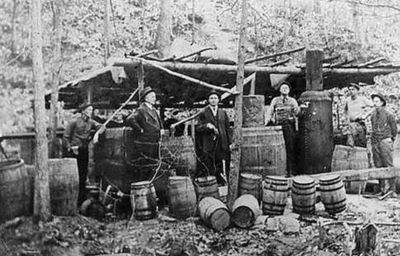
THE MOONSHINE KING OF CHEROKEE COUNTY, John Henry Hardin
The 1918 Steele’s Bridge Tragedy
The 1918 Steele’s Bridge Tragedy, Three Soldiers Lost Beneath the Etowah
The 1918 Steele’s Bridge Tragedy, Three Soldiers Lost Beneath the Etowah
Cherokee County, GA:
Long before Lake Allatoona covered much of the landscape we know today, the Etowah River moved through a very different Cherokee County.
There were farms along the river, dirt roads connecting small communities and wooden bridges carrying travelers from one side of the county to the other.
One of those crossings was Steele’s Bridge.
In the summer of 1918, the United States was at war, and Cherokee County became the unexpected setting for a tragedy involving soldiers from Camp Gordon.
On June 16, 1918, a group of approximately 50 soldiers traveled through Cherokee County as part of a military operation to search for Army deserters believed to be hiding in the area.
Their route brought them to Steele’s Bridge, an old wooden bridge spanning the Etowah River.
The first vehicles crossed without incident.
Then another military truck entered the bridge.
The bridge suddenly failed.
The heavily loaded truck plunged roughly 40 feet toward the river below, carrying the soldiers with it.
Three men were killed.
They were Sgt. Abe Marguese, Cpl. Sam Smith and Pvt. Ernest Rheinsmith.
Several other soldiers were injured.
The accident immediately became more than a tragic bridge collapse when investigators began examining what had happened.
Evidence reportedly indicated that supporting timbers beneath the bridge had been deliberately cut and then covered with pieces of wood in an apparent attempt to conceal the damage.
The discovery raised the possibility that the bridge had been sabotaged.
Why?
The soldiers were in Cherokee County as part of an operation to locate military deserters. That connection led investigators to consider whether someone opposed to the military operation had intentionally weakened the bridge.
But the mystery was never fully solved.
No person was definitively held responsible for the apparent sabotage.
For the soldiers who survived, however, the investigation came second to the immediate need to rescue the men trapped in the wreckage.
Among those who responded was Winnie Frances Moore Carpenter, a trained nurse and Reinhardt College graduate who happened to be visiting a nearby farm.
When she learned about the accident, she rushed toward the scene.
She brought linens from the nearby home and used them to help treat the wounded.
In an isolated section of Cherokee County, with emergency medical services nothing like those available today, local people and the nurse worked with what they had to help the injured soldiers.
The tragedy eventually faded from public memory.
Steele’s Bridge itself disappeared from the landscape decades later when the construction of Lake Allatoona transformed the Etowah River valley.
Today, many people traveling through the area may recognize the Steele’s Bridge name without realizing the history attached to it.
The old bridge is gone.
The road network has changed.
The river valley looks completely different.
But beneath the waters and modern landscape is a piece of Cherokee County history that deserves to be remembered.
Three soldiers came to Cherokee County during a time when America was fighting a world war.
They never made it home.
And more than a century later, questions still remain about what really happened beneath Steele’s Bridge.
Was it simply an aging wooden bridge that could not withstand a military truck?
Or had someone deliberately weakened the crossing?
The evidence discovered afterward suggested something far more troubling than an ordinary accident.
The people responsible, if the bridge was indeed sabotaged, disappeared into history.
But the names of the three soldiers remain.
Sgt. Abe Marguese.
Cpl. Sam Smith.
Pvt. Ernest Rheinsmith.
Their story is part of the history of Cherokee County, a reminder that some of the county’s most important stories are not found in today’s busy downtowns or along its modern highways.
Some are buried beneath the water.
Some survive only in old newspaper accounts.
And some are remembered by the names of roads that most people pass every day without knowing why they are there.
Steele’s Bridge is one of those stories.

The 1918 Steele’s Bridge Tragedy, Three Soldiers Lost Beneath the Etowah
1928 Tornado of Cherokee County Georgia
The Night a Tornado Tore Through Cherokee County: The Tragedy of 1928
Six people died, families lost their homes, and a rural community came together to help survivors after one of the most devastating storms in Cherokee County history.
On the night of March 26, 1928, a powerful tornado swept through the rural communities of Orange and Lathemtown, leaving death and destruction in its wake. Homes were torn apart, barns were reduced to rubble, livestock disappeared, and families who had gone to bed expecting an ordinary night found themselves fighting for their lives.
By the time the storm passed, six people were dead and approximately 20 others had been injured. Entire families had lost their homes and possessions, and survivors faced the heartbreaking task of recovering loved ones from the wreckage.
The Cherokee Advance, reporting in its March 28, 1928, edition, described the storm as the “Most Appalling Disaster Ever Visited Upon Cherokee County.”
Nearly a century later, the newspaper’s firsthand account preserves the story of the victims, the extraordinary force of the storm and the community that rallied to help those left behind.
A tornado strikes after dark
The tornado struck at approximately 10 p.m. Monday, March 26, traveling through portions of the Orange and Lathemtown communities in eastern Cherokee County.
In 1928, the area was largely agricultural. Families lived in modest homes surrounded by fields, barns, livestock and wooded hillsides. Neighbors often lived considerable distances apart, connected by narrow country roads.
There were no modern weather radar systems or smartphone alerts to warn residents of an approaching tornado. According to the newspaper, the storm arrived with little warning while many families were sleeping.
The Cherokee Advance reported that the tornado carved a destructive path approximately four miles long, with its width varying along the route. Homes and barns were demolished, trees were uprooted, and livestock and household belongings were scattered across the countryside.
The storm first struck the Millwood home in the Orange community before continuing east toward Lathemtown, where additional homes were destroyed.
For the families in its path, the devastation came in a matter of moments.
The Millwood family suffers an unimaginable loss
The first major tragedy occurred at the home of William J. Millwood, 55, in the Orange community.
William Millwood, his wife, Ida, 45, and two of their children, Allen, 17, and Estelle, reported as 13 in the article’s main account, were killed when the tornado destroyed their home.
Other members of the family were injured, including Alfred, 20, Leo, 11, Edith, 9, and seven year old W. J. Millwood Jr.
The house was torn apart so violently that pieces of the structure were scattered across the surrounding land. Family members were thrown from the home, and survivors were left amid debris in the darkness.
The newspaper described the scene as one of extraordinary destruction. Heavy timbers were splintered, the barn was demolished, and the frightened animals inside were left exposed to the storm.
One particularly striking detail illustrated the tornado’s unpredictable power. A heavy piece of flooring, measuring approximately two inches by eight inches in cross section, was reportedly carried about half a mile and driven several feet into the clay bank of a gully.
Small iron tools were also carried considerable distances, while a nearby pile of cordwood reportedly remained undisturbed.
The contrast between what the tornado destroyed and what it left untouched demonstrated the tremendous and erratic force of the storm.
Alfred Millwood’s harrowing escape
Among the survivors was 20 year old Alfred Millwood, whose account of the storm was published in the Cherokee Advance.
Alfred recalled that the family was in bed when he heard a terrible rushing noise approaching the house.
He ran toward the door to investigate. Before he could escape, a window frame struck him in the head, and the force of the storm hurled him through the air.
According to his account, he traveled approximately 25 yards before landing in the muddy road.
Dazed and injured, Alfred initially struggled to understand what had happened. When the storm quieted, he heard children crying and began searching for the younger members of his family.
He eventually located three of the children and took them to an old house nearby. There, he built a fire to keep them warm.
They remained sheltered until daylight, when Alfred made his way to the home of W. F. Edwards to seek help.
Alfred’s actions that night were remarkable. Despite his own injuries and the loss of his home, he focused on finding the children and getting them to safety.
His account remains one of the most personal and moving parts of the newspaper’s coverage, offering a glimpse into the terror experienced by those who survived the tornado.
More homes destroyed in Lathemtown
After devastating the Millwood property, the tornado continued toward Lathemtown, where it destroyed several more homes.
Osie Heath, 25, was killed when his home collapsed around him.
Grady Fowler, 30, and his wife were visiting the Heath family when the storm struck. The couple heard the approaching storm and attempted to get out of the house, but the building was twisted apart before they could escape.
Fowler suffered severe injuries, including eight broken ribs near the spine and a fractured arm. The original newspaper report expressed grave concern for his survival.
He died on Wednesday morning, March 28, bringing the final death toll to six.
Mrs. Fowler escaped without injury.
The homes of T. W. Green and Howard McCuen were also destroyed. Green and his family were away from home when the tornado struck, while McCuen and his wife were injured. Their baby escaped without a scratch.
The destruction was particularly severe around the Heath property. Heavy beams were splintered, walls and the roof were torn away, and the floor was lifted and deposited several feet from its original location. Part of the chimney was left standing.
The newspaper noted that the force of the tornado appeared especially concentrated in Lathemtown, although the debris there was not carried as far as it had been around the Millwood home.
A sound like an airplane
Residents who heard the storm described a terrifying noise.
W. F. Edwards, who lived near the Millwood property, later said the tornado sounded like an airplane passing overhead, loud enough to drown out the thunder.
Although Edwards heard the storm during the night, he did not realize that people had been killed and injured until daylight revealed the extent of the destruction.
When he learned what had happened, he summoned assistance. The injured survivors were taken to Canton for medical attention, including treatment at Coker’s Hospital.
The experience illustrates how difficult it was for rural residents to understand the scale of a disaster occurring after dark, particularly when homes and roads were separated by fields and wooded areas.
Canton doctors and the Red Cross respond
As news of the tragedy spread, residents and community leaders began organizing relief efforts.
The injured were taken to Canton, where they received medical attention at Coker’s Hospital. The hospital’s Dr. Coker was later praised in the newspaper for providing care to the injured Millwood children without expecting payment.
The March 28 report also described the response of the Canton chapter of the American Red Cross, led by chapter chairman W. S. Elliott.
The organization arranged for medical treatment and burial assistance while calling on residents across Cherokee County to contribute to a relief fund.
Local committees were organized in Canton, Woodstock, Ball Ground, Waleska, Holly Springs, Orange and Lathemtown.
Residents were urged to contribute money to help pay funeral expenses and provide food, clothing, medicine and other necessities for families left destitute by the tornado.
The appeal emphasized the scale of the suffering and the urgent need for assistance.
It was a countywide effort, bringing together people from communities across Cherokee County to support neighbors who had lost nearly everything.
The heartbreaking aftermath
By Friday, April 6, 1928, the Cherokee Advance was reporting on the survivors’ recovery.
Three of the injured Millwood children, ages 7, 9 and 14 according to the follow up report, remained at Coker’s Hospital. The nine year old girl had suffered fractures to both arms and other injuries.
The newspaper described the children as coming from a good but humble home. It noted that they had rarely, if ever, visited town and had never tasted ice cream.
Now, amid the wreckage of their former lives, they found themselves surrounded by dolls, picture books, toys and gifts brought by visitors who wanted to comfort them.
The report praised Dr. Coker for giving the children every attention without thought of financial reward.
Alfred Millwood had already left the hospital and was able to walk about. On the Sunday following the tornado, he returned to the scene of the destruction.
What he encountered was a steady stream of visitors arriving by automobile to view the damage.
The narrow country road became so crowded that residents took it upon themselves to direct traffic, allowing vehicles to travel in one direction at a time.
Visitors had come from towns and cities many miles away. They walked across the devastated property, examining the scattered pieces of iron beds, broken lumber and uprooted trees.
The newspaper reported that pieces of the Millwood home had been scattered as far as a quarter of a mile from the original site. The path of the storm could be traced by uprooted trees and exposed red clay.
One nearby family, living about half a mile from the Millwood home, reportedly noticed little beyond a brisk gale.
The contrast was extraordinary. One family had lost nearly everything, while another only a short distance away experienced a relatively ordinary storm.
Six victims laid to rest
The tornado claimed the lives of William J. Millwood, Ida Millwood, Allen Millwood, Estelle Millwood, Osie Heath and Grady Fowler.
Heath’s funeral was held Wednesday morning, March 28. The four Millwood family members were buried Thursday, March 29, with all four laid to rest in a single grave, according to the original newspaper account.
The Red Cross helped arrange burial expenses for the victims and continued collecting contributions to support survivors.
The April 6 report stated that donations had arrived from both inside and outside Georgia. The relief fund was intended to cover funeral expenses and provide food, clothing and medicine, with additional assistance potentially available to help families rebuild.
For those who survived, the loss extended far beyond the immediate destruction of their homes. They faced the difficult prospect of rebuilding their lives without the people, possessions and shelter they had depended upon.
A tragedy Cherokee County must not forget
The March 1928 tornado was more than a severe weather event. It was a tragedy that struck families in their homes, took the lives of parents and children, and left neighbors struggling to help those who had lost everything.
The original reports in the Cherokee Advance preserve the names of the victims, the words of survivors and the generosity of a community that responded when help was desperately needed.
Today, nearly a century later, the story offers an important reminder of Cherokee County’s rural past and the strength of the communities that existed long before modern development transformed the landscape.
The people of Orange and Lathemtown endured a night that changed their lives forever. Their story deserves to be remembered, not only for the devastation of the tornado, but also for the courage of survivors such as Alfred Millwood and the generosity of the neighbors, doctors and relief workers who came to their aid.
As Cherokee County continues to grow, preserving these accounts helps ensure that the lives lost and the families affected by the 1928 tornado remain part of the county’s shared history.
Historical sources: The Cherokee Advance, March 28, 1928, and April 6, 1928, including the original report of the tornado and the follow up coverage of the survivors and relief efforts.
Editor’s note: The original March 28 report listed five deaths at the time of publication, with Grady Fowler dying later that Wednesday. The final death toll was six. The original report also contains an inconsistency in Estelle Millwood’s age, listing her as 15 in a sidebar and 13 in the main article. This article preserves the age given in the main account.

W. L. Dupree
The Woodstock Banker Whose Name Still Lives On In Cherokee County And Our Oldest Park.
Long before Woodstock became one of the fastest growing communities in Cherokee County, it was a small town surrounded by farms, mills, country roads and families whose names became part of the community’s history.
One of those names was William Lee Singleton “W. L.” Dupree, a farmer, businessman, banker, civic leader and longtime Woodstock resident whose influence reached far beyond the bank where he spent two decades serving his community.
Today, thousands of people know the name Dupree because of Dupree Park, Woodstock’s oldest public park at 513 Neese Road. The City of Woodstock describes the park as a longtime community recreation center, with fields, trails, courts, a fishing pond, playgrounds and other amenities.
But behind that familiar name is the story of a Cherokee County man born during the Civil War who helped shape Woodstock’s business and civic life at the beginning of the 20th century.
Born During the Civil War
William Lee Singleton Dupree was born September 11, 1863, on a plantation approximately one and a half miles east of Woodstock along Arnold Mill Road.
His parents were William Griffin Dupree and Miriam “Myra” Haney Dupree, both natives of Union County, South Carolina.
His father had moved from South Carolina into Georgia, first settling in Gordon County before eventually establishing a farm in Cherokee County.
According to the 1926 History of Georgia, William Griffin Dupree became a successful farmer through what the biographical volume described as intelligently directed labor. He also became involved in public affairs and served as a Justice of the Peace.
The elder Dupree’s life was also shaped by the Civil War. He served as a captain of a Confederate infantry company and was stationed in northwest Georgia.
His son, W. L., was born into that turbulent period and grew up in the years immediately following the war as Cherokee County itself was rebuilding and changing.
From Cherokee County Farm Boy to Banker
W. L. Dupree received his education through private schools in Cherokee County.
He also learned something that would remain important throughout his early adult life: farming.
As a young man, Dupree became familiar with the practical work of cultivating the land. He eventually became a farmer himself, following the occupation until he was approximately 36 years old.
At the turn of the century, however, Woodstock was changing.
The community was developing beyond its agricultural roots, and Dupree moved into town and entered the mercantile business.
For approximately three years, he was involved in Woodstock’s commercial interests.
Then came the decision that would permanently connect his name with the town’s financial history.
The Bank of Woodstock
In 1905, W. L. Dupree helped organize the Bank of Woodstock.
The institution opened with capital stock of $25,000, a substantial foundation for a small community bank at the time.
J. H. Johnston became the bank’s first president.
Dupree became its cashier.
And he remained in that position for approximately 20 years.
The 1926 History of Georgia described Dupree as a man who worked tirelessly to build the bank’s reputation and financial strength. By the time the biography was published, the bank still had its original $25,000 capital stock and had accumulated a $16,000 surplus fund.
Dupree was more than a bank employee. He became one of the people associated with the institution’s identity and growth.
The biography described him as a keen student of human nature who understood the principles of modern finance.
For a community like early 20th century Woodstock, the local bank was more than a place to deposit money.
It was part of the town’s economic foundation.
Farmers, merchants and families depended upon local financial institutions to help finance businesses, farms and everyday life.
For two decades, W. L. Dupree was sitting behind the cashier’s desk as Woodstock grew around him.
A Family Connected to Cherokee History
On December 27, 1897, Dupree married Emma Grace Latimer, the daughter of Senator Pierce Butler Latimer, a prominent Cherokee County planter and public official.
The Latimer family was itself deeply involved in Georgia’s political and agricultural history.
Pierce Butler Latimer served two terms in the Georgia House of Representatives and two terms in the state Senate. He also served as custodian of public buildings in Atlanta after receiving an appointment from Governor Joseph E. Brown.
The marriage connected two established Cherokee County families.
W. L. and Grace Dupree eventually raised five children:
Mary Alice, who married Frank H. Tigner of Greenville, Georgia.
William Latimer, who served as a “Y” worker during World War I and later became associated with Continental Motor Company in Muskegon, Michigan.
Grace Elizabeth, who married Paul E. Osborn of Muskegon and became the mother of Virginia Latimer.
Miriam, who studied piano at the Atlanta Conservatory of Music.
And Samuel, the youngest, who was attending Woodstock High School when the 1926 biography was published.
Grace Dupree was also described as an accomplished musician who took an active interest in religious work.
A Life Beyond Banking
W. L. Dupree’s influence was not limited to the bank.
He served on the Woodstock town council and the local school board, contributing to the community’s civic development.
He was also active in the Methodist Episcopal Church, serving as one of its stewards and teaching a Sunday school class.
Dupree was a Mason and belonged to Little River Lodge No. 346, F. & A. M., where he served as treasurer.
The 1926 biographical account portrayed him as a respected community leader whose reputation rested on personal integrity, business ability and public service.
In an era when a person’s reputation was often built face to face, across store counters, church pews, farms, bank offices and town meetings, those qualities mattered.
The Park That Carries His Name
Decades after W. L. Dupree’s banking career, his name became part of Woodstock’s public landscape.
Today, Dupree Park is recognized by the City of Woodstock as the city’s oldest park.
Historical government records provide an important clue to the park’s connection to Dupree.
What was once a man’s name in a 19th century Cherokee County farming community became the name of a place where generations of Woodstock residents would eventually gather, play, walk, fish and spend time with their families.
From Farm Fields to Community Fields
There is something particularly fitting about that connection.
W. L. Dupree began life on a Cherokee County plantation and learned agriculture before becoming a businessman and banker.
Today, his name is attached to public green space where children play, families gather and residents enjoy the outdoors.
The landscape around Woodstock has changed almost beyond recognition since Dupree’s lifetime.
The dirt roads and farm fields have given way to paved streets, neighborhoods, businesses and a growing city.
But the name remains.
The bank where Dupree spent much of his professional life belongs to another era.
The farms he knew have largely disappeared beneath modern development.
The town he knew has become a thriving city.
Yet W. L. Dupree Park remains, carrying the name of a man who helped build Woodstock during one of the most important periods in its history.
Remembering the People Behind the Names
History is often preserved in obvious places: courthouse records, old buildings, monuments and cemeteries.
But sometimes it survives in something much simpler.
A street.
A building.
A park.
A familiar name.
For many Woodstock residents today, Dupree is simply the name of a beloved city park.
For those willing to look a little deeper, it is the name of a Cherokee County farmer’s son who became a businessman, helped establish a local bank, served his town, supported his church and school system, raised a family and earned the respect of the community around him.
William Lee Singleton “W. L.” Dupree died in Georgia and was laid to rest alongside his wife, Emma Grace, at Marietta City Cemetery.
More than a century after he helped establish the Bank of Woodstock, his name remains part of the community he helped shape.
And every day, people walk through Dupree Park without necessarily knowing the story behind the name.
That story is Cherokee County history.

The Boy Behind the Name: The Story of Tommy Baker Field
On a Friday night, thousands of Cherokee County residents can look across a football field and see the future.
But the name painted on that field belongs to a boy from Canton whose life ended long before the modern era of Friday Night Lights.
His name was Tommy Baker.
Today, Cherokee Warriors football is played on Tommy Baker Field at the new Cherokee High School in Canton. But the name is not new. It reaches back nearly seven decades, to a young Cherokee High School student whose story became part of the school’s history.
Tommy Baker died in 1957.
The following year, Cherokee High School honored his memory by naming its football field after him. The dedication took place in November 1958, establishing a tradition that would remain with Cherokee High School for generations.
A Cherokee boy remembered
Accounts of Tommy’s life describe him as a well loved Canton student.
Tommy had contracted polio and, after treatment, returned home using a wheelchair. Despite his physical limitations, accounts from those familiar with the story describe him as a boy who continued to smile, laugh and remain involved with the Cherokee High School community.
Tommy and his parents became familiar faces around the school, including at the football concession stand.
Then tragedy struck.
According to a local account of Tommy’s story, his wheelchair turned over on school grounds. He suffered a fatal injury and died in 1957.
He was only 15 years old.
Tommy’s death could have simply become another painful memory in an already long history of Cherokee County families.
Instead, his classmates, school and community chose to remember him.
A field became a memorial
In 1958, the Cherokee High School football field was dedicated in Tommy Baker’s memory.
From that point forward, generations of Cherokee students would step onto a field carrying the name of a boy they never had the chance to meet.
The field became more than a place where football was played.
It became part of the identity of Cherokee High School.
Old newspaper records show that by the mid 1960s, Cherokee County communities were already referring to the location as Tommy Baker Field when advertising football games.
For decades, the name remained.
Warriors played there.
Parents watched their children play there.
Students celebrated victories there.
Bands performed there.
Community events filled the stands.
And generation after generation of Cherokee students heard the name Tommy Baker without necessarily knowing the heartbreaking story behind it.
Seventy years later, the name lives on
When Cherokee High School prepared to move into its new campus in 2026, school officials faced a question familiar to communities everywhere:
What pieces of the old school should move forward?
The answer included Tommy Baker.
A committee of students, parents, teachers and community members recommended that the new football field continue to carry his name.
The Cherokee County School Board approved the recommendation.
The new stadium received the name Warrior Stadium, but the field itself remained Tommy Baker Field.
School officials described the tradition as representing the friendship, camaraderie and courage associated with Tommy Baker’s life and his influence on the Cherokee community.
In 2026, Cherokee football officially began another chapter at the new campus, but the field carried an old name into the new era.
Tommy’s name came with it.
More than a football field
There are plenty of famous names around Cherokee County.
Names attached to roads.
Schools.
Buildings.
Parks.
Businesses.
But some names survive because people deliberately refuse to let them disappear.
Tommy Baker’s is one of those names.
He was not a professional athlete.
He was not a coach.
He was not a politician or famous businessman.
He was a Cherokee County teenager who faced circumstances that changed his young life, continued to be part of the school community, and was tragically taken far too soon.
His classmates and community chose to remember him by putting his name where generations of young people would see it.
And that may be the greatest legacy of all.
Every time the Cherokee Warriors take the field, Tommy Baker’s name is announced again.
Every Friday night, another generation walks across the same symbolic ground.
The stadium may be new.
The lights may be brighter.
The school may be different.
But the name remains.
Tommy Baker Field.
A football field named for a Cherokee boy who died in 1957, but whose name has never left the school he loved.

The Boy Behind the Name: The Story of Tommy Baker Field